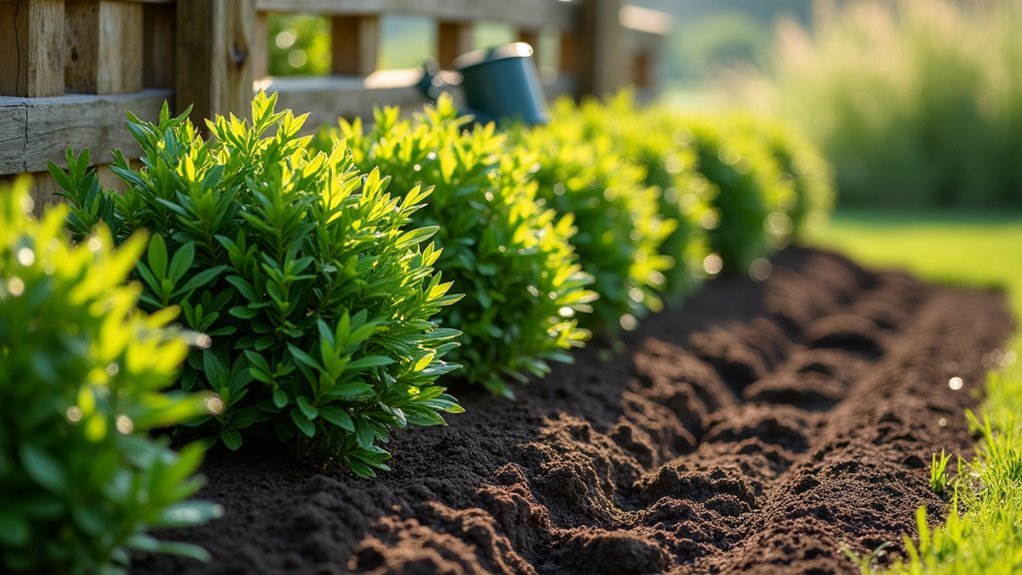
After laying a hedge, you’ll need to water deeply during establishment, apply 2-3 inches of mulch away from stems, trim new growth to encourage lateral branching, monitor for pests and wildlife damage, install protective guards around young plants, firm up loosened vegetation, and follow a seasonal maintenance schedule. Shape your hedge into an ‘A’ formation for ideal light penetration. These essential care steps during the first two years will determine your hedge’s long-term health and density.
7 Essential Steps For Post-Hedge Laying Care

Once you’ve completed the demanding task of laying a hedge, your work has only just begun. Proper aftercare guarantees your hedging plants develop into a robust, living boundary that will thrive for years.
Monitor and trim dominant vertical shoots regularly to promote lateral growth and thickening. This vital practice shapes the hedge’s structure and encourages dense new growth.
During the first two years, remove competing weeds thoroughly to prevent them from stealing water and nutrients your establishing hedge needs.
Maintain consistent watering, especially during dry periods in the first year, as this supports strong root development. Protect vulnerable new shoots from wildlife damage by installing tree guards.
Consider selecting rabbit-resistant species if these animals are prevalent in your area.
Finally, implement a seasonal maintenance schedule for pruning and health monitoring to guarantee longevity.
Establishing a Proper Watering Schedule
Because proper hydration determines whether your newly laid hedge thrives or struggles, establishing a consistent watering schedule is essential during the establishment phase. Water deeply every 2-3 days during the first month to help the root system establish and prevent shock.
| Time Period | Watering Frequency | Soil Moisture Check |
|---|---|---|
| First month | Every 2-3 days | Keep consistently moist |
| 1-3 months | 1-2 times weekly | Allow slight drying between waterings |
| 3-12 months | As needed based on weather | Monitor for dryness |
| Year 2+ | During dry spells only | Check beneath mulch layer |
After the initial month, reduce watering to once or twice weekly. Adding a 2-3 inch mulch layer will retain soil moisture and reduce watering needs. Remember that evergreens may show yellowing when under-watered, so monitor them closely, especially during warm weather.
Applying Protective Mulch Layers
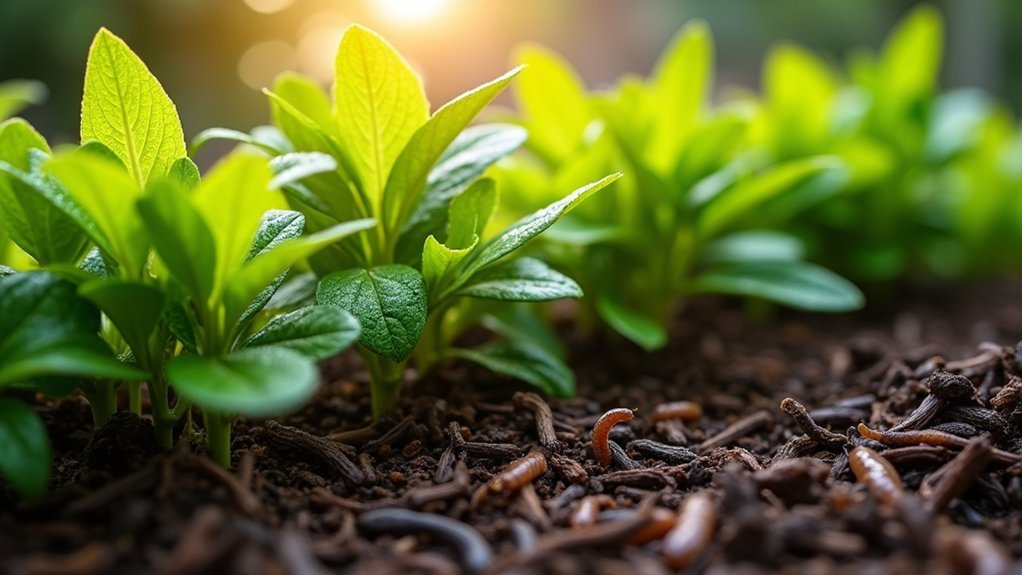
While your newly laid hedge establishes its root system, applying a proper mulch layer serves as one of the most beneficial protective measures you can take.
Spread a 2-3 inch layer of organic mulch like wood chips or straw around your hedge, keeping it several inches away from the stems to prevent rot and discourage pests.
This protective barrier helps retain soil moisture, regulates temperature fluctuations, and suppresses competing weeds—all vital factors for successful root establishment.
As organic mulches decompose, they’ll gradually enrich your soil with nutrients, creating an even healthier environment for your hedge.
You’ll need to replenish your mulch annually, especially after heavy rain or wind events.
Regularly check that it hasn’t compacted, keeping it loose enough to allow water penetration and proper air circulation.
Implementing Strategic Pruning Techniques
After your hedge has settled from the laying process, strategic pruning becomes essential for its long-term structure and health.
Begin in the first autumn after laying, focusing on controlling vertical growth while encouraging denser lateral shoots. Always trim the front face at a slight angle to create an ‘A’ shape, which allows better light penetration and improves the hedge’s appearance as it matures.
- Start with tighter trims in the early years, gradually allowing the hedge to reach your desired height while maintaining density.
- Adjust your trimming frequency based on growth rates—more often during vigorous periods, less when regrowth is slow.
- Watch for dominant vertical growth and trim immediately when spotted to prevent gaps and encourage lateral branching.
Monitoring for Pest and Disease Issues
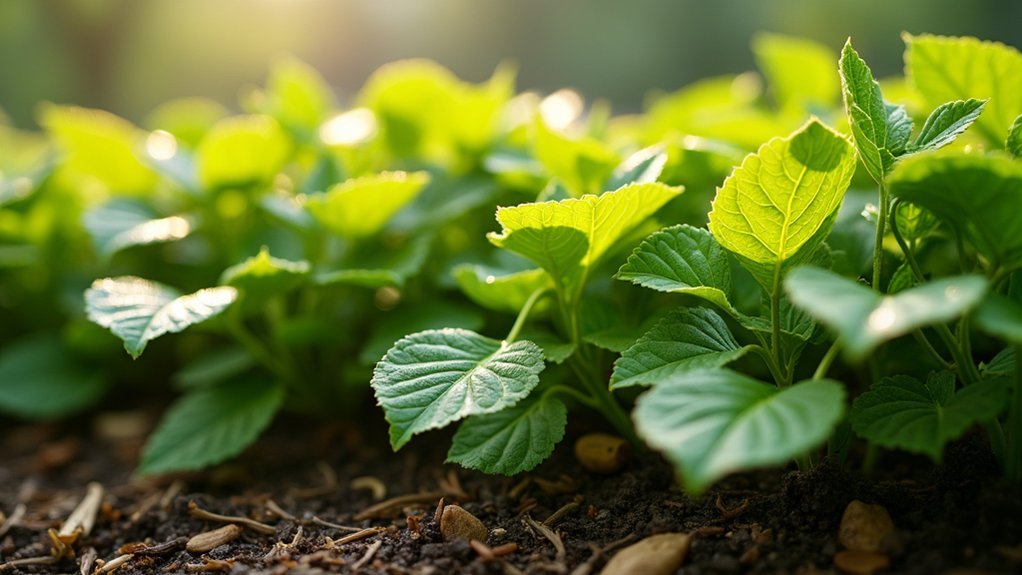
Your newly laid hedge requires vigilant monitoring for potential threats that could undermine its establishment. Regularly inspect your hedge for aphids, caterpillars, and scale insects, which can quickly compromise its health if left unchecked.
Look for telltale signs of disease such as discolored leaves, wilting, or abnormal growths that may indicate fungal or bacterial infections.
Proactive pest management through the introduction of beneficial insects like ladybugs or application of organic pesticides can prevent infestations from taking hold.
Don’t overlook environmental factors—drought stress and root damage can weaken your hedge, making it more susceptible to pest and disease problems.
Keep a monitoring journal documenting any issues you encounter and the effectiveness of your interventions. This record will prove invaluable for refining your care strategy in subsequent seasons.
Managing New Growth and Regeneration
You’ll need to begin trimming new growth immediately after hedge laying to encourage lateral branching and prevent vertical dominance.
Control dominant shoots by regularly cutting them back, which redirects energy into the pleachers and thickens your hedge’s structure.
Maintaining an ‘A’ shape during trimming provides ideal light distribution and helps establish a balanced, healthy hedge that won’t revert to its pre-laid condition.
Encouraging Lateral Branching
The development of a thick, robust hedge depends greatly on how you manage new growth in the years following laying. To promote lateral branching and create dense growth, you’ll need to implement strategic trimming right from the beginning.
When you trim the tops of pleachers immediately after laying, you’re encouraging shoots to grow sideways rather than upward. This prevents vertical dominance and builds thickness from the base up.
- Shape your hedge into an ‘A’ formation during regular trimming sessions to support side shoot development.
- Remove vigorous upward growth while preserving lower lateral shoots for fuller structure.
- Monitor growth patterns during the first two years, redirecting energy toward lateral growth when vertical shoots begin to dominate.
This foundation of lateral growth will transform your laid hedge into a living barrier with excellent density and stability.
Controlling Dominant Shoots
While your hedge recovers from laying, dominant vertical shoots will inevitably emerge from the pleachers, threatening to overtake the carefully established structure.
You’ll need to monitor these aggressively growing stems closely, as they can quickly overshadow lateral shoots that create desirable density.
If regrowth becomes vigorous, don’t hesitate to begin trimming immediately. This prompt action encourages lateral shoots to develop and prevents your hedge from reverting to its original vertical habit.
However, if growth rates remain slow during the first year, consider delaying your initial trim until the second season, allowing the root system to strengthen.
Adapt your trimming frequency based on observed growth rates. Regular pruning in the early years is essential for maintaining the balanced structure you’ve worked hard to create.
Seasonal Maintenance Requirements
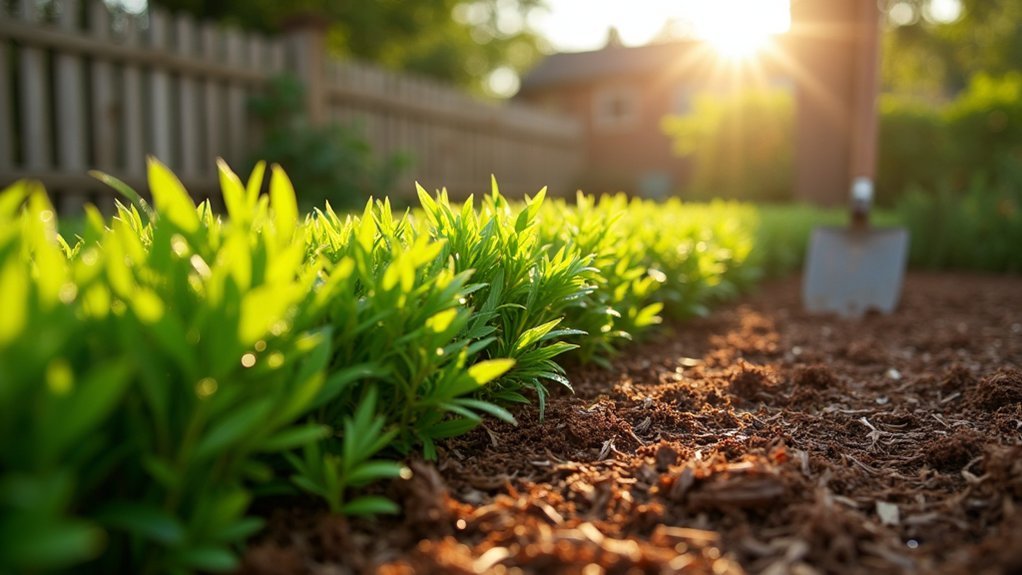
You’ll need to protect your newly laid hedge from winter damage by applying mulch at the base and checking for frost heave after ground thaws.
During summer, increase watering frequency to every 2-3 days during dry periods while monitoring for drought stress signs like wilting or yellowing foliage.
It’s also important to manage summer growth by controlling competing vegetation and applying a balanced fertilizer if your hedge shows signs of nutrient deficiency.
Winter Protection Essentials
Newly laid hedges require special attention during winter months when harsh conditions can threaten their establishment. Your hedges will need proper protection from frost, wind, and hungry wildlife to guarantee they thrive come spring.
- Apply mulch around the base of your hedge to insulate roots, retain moisture, and suppress competing weeds that might steal valuable nutrients.
- Install tree guards to protect young plants from rabbits and other browsing animals that can cause significant damage when food sources are scarce.
- Check regularly for wind damage and firm any loosened plants. In particularly exposed locations, consider using stakes or windbreak netting for additional stability.
Don’t forget to monitor for frost damage, especially during late winter, and promptly address any issues by covering vulnerable sections with breathable fabric during severe cold snaps.
Summer Growth Management
As winter protection measures safeguard your laid hedge through the colder months, summer brings its own set of maintenance challenges. Your newly planted hedge requires vigilant care during its first growing season to ascertain proper establishment.
Keep the area surrounding your hedge completely weed-free for at least two years. Competition from grass and weeds can deprive young plants of essential moisture, light, and nutrients.
Apply mulch around the base to retain enough water, regulate soil temperature, and suppress weed growth.
Monitor soil moisture regularly and water deeply when needed, especially during hot periods.
Consider installing guards to protect tender growth from rabbit damage.
Light trimming of vigorous vertical shoots encourages lateral branching, resulting in a denser hedge.
With proper summer maintenance, your laid hedge will develop a strong foundation for years of healthy growth.
Frequently Asked Questions
What Is the Basics of Hedge Laying?
You’ll cut stems at an angle, lay them over partially, and weave them together. This creates living fences that grow thicker with new shoots. Work during dormant months with proper tools like billhooks.
How to Maintain a Laid Hedge?
To maintain a laid hedge, you’ll need to trim regularly in autumn, monitor vertical growth, preserve an ‘A’ shape, weed and water consistently, and protect from wildlife damage, especially during the first two years after laying.
How to Care for a New Hedge?
Water your new hedge deeply every 2-3 days during the first month. Apply 2-3 inches of mulch, weed regularly, and monitor for stress signs. Use protective guards against wildlife and trim in the second year.
What Is the Best Billhook for Hedge Laying?
For hedge laying, you’ll want a billhook with high-carbon steel and a 7-9 inch curved blade. Traditional wooden handles provide better grip. Elwell or Bulldog brands offer quality options for both beginners and professionals.
In Summary
Taking proper care of your newly laid hedge isn’t complicated if you’re consistent. Follow these seven essential steps to guarantee your hedge thrives: maintain a regular watering schedule, apply protective mulch, prune strategically, monitor for pests and diseases, manage new growth, and adjust maintenance seasonally. You’ll be rewarded with a robust, healthy hedge that enhances your property’s beauty and provides valuable wildlife habitat for years to come.