You’re about to compare seven log splitters that could make turning knotty fence timber into clean, usable boards a lot easier. Each model balances power, portability, and storage in its own way, from foot‑operated units that let you stay on your feet to wall‑mounted levers that keep your workspace tidy. The right choice hinges on rust‑resistant finishes, ergonomic handles, and the ability to handle typical fence‑grade sizes. Keep these factors in mind, and you’ll see which splitter truly fits your fence‑building workflow.
| Timber Tuff Manual Log Splitter (TMW‑11) Steel Splitting Tool |  | Heavy-Duty Performer | Power Source: Manual | Primary Material: Steel | Intended Use: Firewood / kindling preparation | CHECK ON AMAZON | Read Our Analysis |
| Timberjack Log Lifter – 48″ Wood & Metal Splitter Tool | 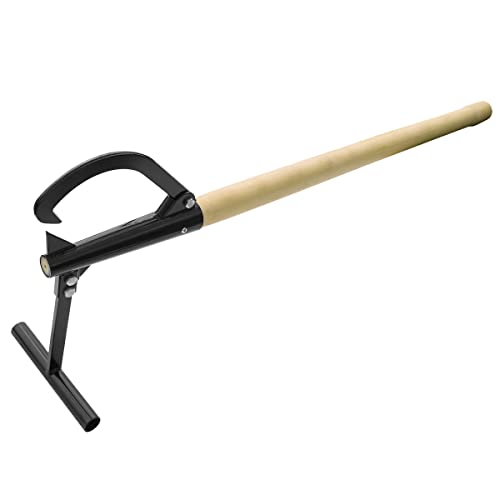 | Log Lifting Pro | Power Source: Manual (lever‑action) | Primary Material: Wood & Metal | Intended Use: Log lifting & positioning for cutting | CHECK ON AMAZON | Read Our Analysis |
| Timber Tuff TMW-84 Foot-Operated Kindling Splitter |  | Foot-Operated Convenience | Power Source: Manual (foot‑operated) | Primary Material: Steel (cast‑iron coating) | Intended Use: Kindling splitting (campfire, fireplace) | CHECK ON AMAZON | Read Our Analysis |
| Kindling Splitter – Manual Cast Iron Wood Splitter (Medium) |  | Compact Cast Iron | Power Source: Manual | Primary Material: Cast Iron | Intended Use: Kindling splitting (manual) | CHECK ON AMAZON | Read Our Analysis |
| 6‑Piece Wood Splitter Drill Bits – Heavy‑Duty Detachable Design |  | Drill-Bit Power | Power Source: Electric drill (powered) | Primary Material: High‑Carbon Steel | Intended Use: Wood splitting with drill (firewood) | CHECK ON AMAZON | Read Our Analysis |
| 45+32mm Firewood Log Splitter Set Detachable Heavy-Duty | 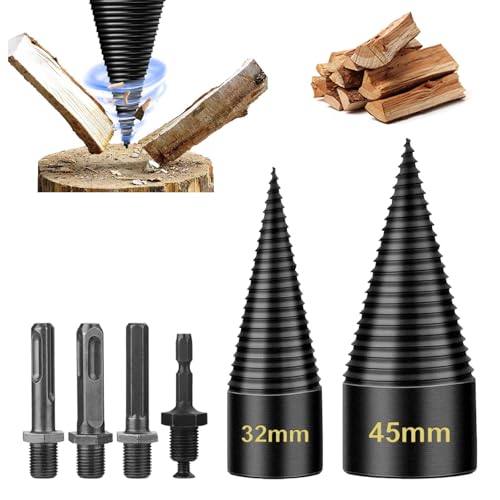 | Versatile Splitter Set | Power Source: Electric drill (powered) | Primary Material: High‑Carbon Steel | Intended Use: Wood splitting with drill (firewood) | CHECK ON AMAZON | Read Our Analysis |
| Timber Tuff Wall-Mounted Cast Iron Kindling Splitter |  | Wall-Mounted Efficiency | Power Source: Manual (hand‑lever) | Primary Material: Cast Iron | Intended Use: Kindling splitting (softwood) | CHECK ON AMAZON | Read Our Analysis |
More Details on Our Top Picks
Timber Tuff Manual Log Splitter (TMW‑11) Steel Splitting Tool
The Timber Tuff Manual Log Splitter (TMW‑11) shines for anyone who needs a rugged, no‑power solution for chopping firewood or kindling on a farm, homestead, or backyard. You’ll feel the 8.8‑pound slide hammer’s heft as it drives the 2‑inch steel wedge through logs, while the cushion grip keeps your hands secure and out of the way. Heat‑treated steel and a powder‑coat finish give durability, and the 13.73‑pound weight offers stability without being unwieldy. Its compact 33 × 2 × 3‑inch profile fits in a shed or truck bed, and the one‑year warranty covers manufacturer defects. This tool handles firewood, kindling, and general timber work with controlled, repeatable splits.
- Power Source:Manual
- Primary Material:Steel
- Intended Use:Firewood / kindling preparation
- Size / Capacity:2‑inch blade length, 13.7 lb weight
- Safety Feature:Slide‑hammer keeps hands clear of wedge
- Finish / Coating:Powder coat
- Additional Feature:Slide‑hammer action
- Additional Feature:Cushion comfort grip
- Additional Feature:Powder‑coat finish
Timberjack Log Lifter – 48″ Wood & Metal Splitter Tool
Looking for a tool that lets you lift and position logs without straining your back? The Timberjack Log Lifter does just that, hoisting logs 14 inches off the ground so your chainsaw cuts at a better angle. Its 48‑inch wooden handle and rugged metal lever let you operate solo, reducing fatigue. The tan‑and‑black design fits any workshop, and the 14.5‑inch width accommodates various log sizes. You’ll keep logs away from the earth, preventing binding and digging while you work. Built for seasonal use, it lasts year after year—just store it in a garage or shed when you’re done.
- Power Source:Manual (lever‑action)
- Primary Material:Wood & Metal
- Intended Use:Log lifting & positioning for cutting
- Size / Capacity:48‑in length, lifts logs 14 in off ground
- Safety Feature:Lever‑action keeps hands away from log
- Finish / Coating:Tan & black (natural wood finish)
- Additional Feature:14‑inch lift height
- Additional Feature:Wood‑metal hybrid handle
- Additional Feature:Lever‑action single‑person operation
Timber Tuff TMW-84 Foot-Operated Kindling Splitter
Ever need a quick, low‑effort way to turn long logs into kindling? The Timber Tuff TMW‑84 foot‑operated splitter lets you crush 18‑inch logs and 10‑inch diameters with a simple step. Its ratchet mechanism transfers foot pressure into powerful splits, sparing your arms and back. The compact, powder‑coated unit fits snugly in a trunk or shed, and you can stash it upright when not in use. You’ll appreciate the sturdy finish that resists rust and wear, making it perfect for campfires or wood‑stove kindling. With minimal setup, you get fast, reliable splits without bruising yourself.
- Power Source:Manual (foot‑operated)
- Primary Material:Steel (cast‑iron coating)
- Intended Use:Kindling splitting (campfire, fireplace)
- Size / Capacity:Handles logs up to 18 in long, 10 in diameter
- Safety Feature:Foot‑operated step ratchet, hands free
- Finish / Coating:Powder‑coat paint
- Additional Feature:Step‑ratchet mechanism
- Additional Feature:Foot‑operated split
- Additional Feature:Compact storage size
Kindling Splitter – Manual Cast Iron Wood Splitter (Medium)
Need you need a compact, rugged splitter that handles medium‑sized kindling without electricity, the BAYQISI Manual Cast Iron Kindling Splitter delivers exactly that. Its one‑piece molding cast‑iron blade is welded‑free, rust‑resistant, and painted with an eco‑friendly coating. A rubber‑sleeve and upgraded anti‑touch safety keep your hands clear while the axe‑shaped edge slices dry logs efficiently. We 3‑lb sledge hammer aids each strike, and four installation screws let you mount it on stumps or a workbench. We at 7.5 lb, 9.8 in tall, it’s light enough to carry yet sturdy enough for frequent use. Regular spray‑paint maintenance preserves the blade, and the product enjoys a 4.1‑star rating from 78 reviewers.
- Power Source:Manual
- Primary Material:Cast Iron
- Intended Use:Kindling splitting (manual)
- Size / Capacity:7.5 lb weight, 9.8 in height (medium blade)
- Safety Feature:Rubber sleeve on blade, anti‑touch safety
- Finish / Coating:Environmentally‑friendly paint (rust‑resistant)
- Additional Feature:Integrated 3‑lb sledge hammer
- Additional Feature:Rubber sleeve safety guard
- Additional Feature:One‑piece cast‑iron molding
6‑Piece Wood Splitter Drill Bits – Heavy‑Duty Detachable Design
If you’re tackling large fence‑timber logs and want a fast, reliable way to split them without a bulky hydraulic splitter, the 6‑piece wood splitter drill‑bit set delivers exactly that. You’ll attach the 45 mm or 32 mm bit to a hammer or impact drill, then secure the round, square, or hex handle with its anti‑slip slot. The heat‑treated carbon‑steel shaft, titanium‑coated spiral head, and detachable screw‑cone driver cut cleanly, letting you split logs quickly. Use a >750 W electric or >500 W cordless drill, avoid wet wood, and drill near the edge, not the center. The set handles light to hard wood, saving time compared to manual splitters.
- Power Source:Electric drill (powered)
- Primary Material:High‑Carbon Steel
- Intended Use:Wood splitting with drill (firewood)
- Size / Capacity:45 mm & 32 mm drill bits, 2.39 lb total set weight
- Safety Feature:Anti‑slip handle slot, protective guard
- Finish / Coating:Titanium finish on drill bits
- Additional Feature:Detachable drill‑bit design
- Additional Feature:Titanium‑coated heads
- Additional Feature:Anti‑slip handle slots
45+32mm Firewood Log Splitter Set Detachable Heavy-Duty
Looking for a compact, versatile splitter that tackles both small and medium logs without swapping tools? The TUEJITE 6‑piece firewood setter set gives you 32 mm and 45 mm high‑carbon‑steel bits, each heat‑treated for sharpness and impact resistance. You attach a round, square, 3/8‑hex, or 1/4‑hex handle, pop the bit into any corded or cordless drill—including hammer or impact models—and start splitting. The anti‑slip U‑shaped thread and deeper threads keep the bit stable, reducing effort. We set packs in a 6.81 × 3.74 × 2.2 in box, weighs 2.39 lb, and includes six wedges for quick reconfiguration.
- Power Source:Electric drill (powered)
- Primary Material:High‑Carbon Steel
- Intended Use:Wood splitting with drill (firewood)
- Size / Capacity:45 mm & 32 mm drill bits, 2.39 lb total set weight
- Safety Feature:Anti‑slip handle slot, protective guard
- Finish / Coating:Titanium finish on drill bits
- Additional Feature:U‑shaped anti‑slip threads
- Additional Feature:Hex‑shank drill handles
- Additional Feature:High‑temperature quench treatment
Timber Tuff Wall-Mounted Cast Iron Kindling Splitter
The Timber Tuff wall‑mounted cast‑iron kindling splitter is the go‑to solution for anyone who wants effortless, blade‑free cutting of softwood kindling—pine, spruce, or birch—directly from a fireplace or wood‑stove setup. Its heavy‑duty cast‑iron body follows a five‑step design and a durable powder‑coat finish that resists rust and wear. Four mounting holes secure it to the wall, eliminating wobble and keeping the work area safe. A 24‑inch handle gives optimal leverage, letting you split kindling with smooth, low‑effort strokes, whether you’re a novice or seasoned user. The splitter delivers precise, blade‑free cuts, producing high‑quality kindling for any stove or fireplace.
- Power Source:Manual (hand‑lever)
- Primary Material:Cast Iron
- Intended Use:Kindling splitting (softwood)
- Size / Capacity:24‑in handle, 5‑step design (wall‑mounted)
- Safety Feature:Wall mounting, 4‑hole secure attachment
- Finish / Coating:Powder‑coat paint
- Additional Feature:5‑step mounting system
- Additional Feature:24‑inch leverage handle
- Additional Feature:Four‑hole wall mount
Factors to Consider When Choosing Log Splitters for Creating Natural Fence Timber Efficiently
You’ll want a splitter with enough power capacity to handle the log sizes you’ll be cutting, so check the horsepower or torque specs first. Choose a blade type that matches the wood’s hardness and consider an ergonomic handle for comfortable, controlled operation. Finally, think about portability, storage space, and built‑in safety features to keep the job efficient and risk‑free.
Power Capacity Requirements
Ever wondered how much power you really need to split fence‑grade timber efficiently? Your splitter’s capacity determines how quickly you’ll turn 12‑18‑inch‑diameter logs into usable rails. Manual models rely on your strength, so they’re limited by stroke design and can lag on tougher wood. Electric and hydraulic units list horsepower, watts, or psi—higher numbers mean faster cycles and the ability to tackle knotty or wet timber that stalls low‑power machines. Aim for a splitter that exceeds the maximum log size you’ll encounter, typically 20 + inches long, to avoid bottlenecks. Remember, more power usually adds weight and requires a reliable power source, so balance capacity with portability and storage constraints for your job site.
Blade Type Selection
What blade you choose can make or break your fence‑timber workflow. A sharpened blade with the right thickness and edge geometry cuts resistance and delivers clean splits, so look for a profile that matches the grain of hardwood fence timbers. Cast‑iron and reinforced‑steel blades last longer under repeated use, but their extra weight can hinder portability compared with lighter forged‑steel wedges. Longer blades give you more leverage and let you split larger‑diameter logs without constant repositioning—a real time‑saver when prepping fence material. If the splitter is foot‑ or hand‑operated, a safety sleeve or guarded edge is essential to prevent accidental contact. Choose high‑carbon or heat‑treated steel for superior edge retention and long‑term performance.
Ergonomic Handle Design
Choosing a log splitter with an ergonomic handle can keep your hands, wrists, and back from tiring out during long fence‑timber sessions. Look for a grip that feels secure and cushioned; rubberized or foam surfaces reduce slippage and absorb shock when you’re pounding through dense wood. Handles that line up with your natural wrist and arm angle preserve posture, easing shoulder and lower‑back strain over hours of work. Dual‑handed or lever‑assisted designs spread effort evenly, so you won’t feel a single hand doing all the heavy lifting. Rounded edges and contoured finger rests lock your hand in place, preventing cramps and giving you precise control. Prioritize high‑quality materials that stay comfortable even when sweaty, and you’ll split fence timber faster with less fatigue.
Portability and Storage
A lightweight, compact splitter can make moving and stowing your equipment a breeze, especially when you’re juggling multiple fence‑timber projects. You’ll want a model that weighs less than 70 lb and fits in a standard garage corner, so look for a slim profile and foldable legs. Carry handles or built‑in wheels let you roll it to the worksite without a truck, while a wall‑mountable bracket lets you store it vertically and free up floor space. Choose a powder‑coated or rust‑resistant finish to keep the tool stable during storage and prevent corrosion. If the splitter can be locked in a vertical position, you’ll avoid accidental tipping and keep the workspace tidy. Prioritizing these portability features saves you time, effort, and storage headaches.
Safety and Control Features
Even if you’ve got a portable, compact splitter, safety and control matter just as much when you’re shaping fence timber. A slide‑hammer design keeps your hands clear of the wedge, reducing the chance of accidental contact. Choose a model with foot‑operated or lever‑action mechanisms; they let you drive the split with your leg or shoulder, sparing your arms and back from strain while preserving precise control. Look for cast‑iron or heavy‑duty steel frames—they stay steady under impact and resist wobble. Ergonomic handles and adjustable grips give you a secure hold, preventing slippage when the wood pushes back. Finally, consider mounting options: wall‑mounted units or sturdy stands provide consistent leverage and improve accuracy, making each split clean and repeatable.
Frequently Asked Questions
Do These Splitters Work on Hardwoods Like Oak?
Yes, they’ll handle oak, but expect slower splits and more wear. Choose a model with higher tonnage and a sturdy, sharp blade, and keep the hydraulic pressure up to avoid stalling.
Can I Use the Drill Bits for Cutting Firewood?
You can’t use drill bits to cut firewood; they’re designed for drilling, not splitting or sawing. Stick to a proper splitter or saw—otherwise you risk dulling the bits and damaging the wood.
What Safety Gear Is Required for Manual Splitters?
You’ll need safety glasses, gloves, steel‑toe boots, hearing protection, and a sturdy work jacket. Secure the splitter, keep a clear area, and never stand directly in line with the wood’s trajectory.
How Often Should the Blade Be Sharpened?
You should sharpen the blade every 30‑40 hours of use, or sooner if you notice dull cuts or increased effort. Regular maintenance keeps performance ideal and prevents strain on the splitter.
Do Foot‑Operated Models Need a Power Source?
Yes, you’ll need a power source—either a corded outlet or a battery pack—because foot‑operated splitters still drive hydraulic pumps or electric motors, and they can’t run solely on foot pressure.