You’re looking for a trellis that lets your living fence thrive without a hassle, and the 2026 diamond‑pattern panels deliver exactly that. From compact 11×47” units to expansive 22×120” layouts, they snap together tool‑free, resist moisture and UV, and accommodate everything from tomatoes to roses. The mix of sturdy rivet joints, weatherproof finishes, and optional LED accents means you’ll get both durability and visual appeal. Curious how each model stacks up against the others?
| Expandable Garden Trellis Panel for Climbing Plants (36×92″) |  | Best Overall | Material: 100% real willow | Expandable Size (Fully Expanded): 22″ × 120″ | Closed Size (Fully Contracted): 11″ × 47″ | CHECK ON AMAZON | Read Our Analysis |
| Expandable Garden Trellis 13.2″ x 63″ for Climbing Plants | Best Value | Material: Carbonized pine | Expandable Size (Fully Expanded): 63″ × 13.2″ | Closed Size (Fully Contracted): 17.3″ × 9″ | CHECK ON AMAZON | Read Our Analysis | |
| Expandable Garden Trellis 37″x90″ Wooden Lattice Panel | Budget-Friendly Pick | Material: Carbonized pine | Expandable Size (Fully Expanded): 90″ × 37″ | Closed Size (Fully Contracted): 45.2″ × 9.4″ | CHECK ON AMAZON | Read Our Analysis | |
| Nature Willow Expandable Plant Trellis (36″x92″) Double Panel | 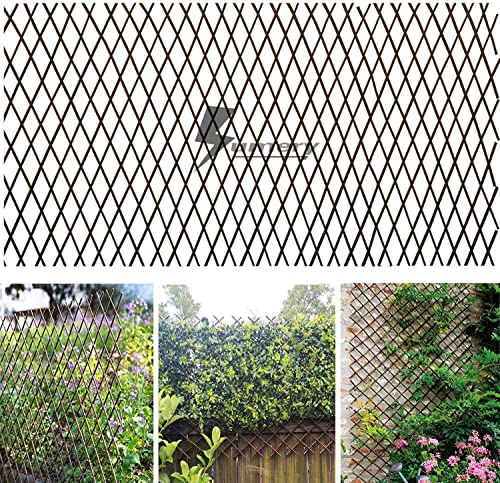 | Editor’s Choice | Material: Natural willow wicker | Expandable Size (Fully Expanded): 22″ × 120″ | Closed Size (Fully Contracted): 11″ × 47″ | CHECK ON AMAZON | Read Our Analysis |
| Expandable Garden Wooden Lattice Trellis 13″x68 | DIY Favorite | Material: Natural cedar wood (carbonized) | Expandable Size (Fully Expanded): 13″ × 68″ | Closed Size (Fully Contracted): 10.2″ × 17.3″ | CHECK ON AMAZON | Read Our Analysis |
More Details on Our Top Picks
Expandable Garden Trellis Panel for Climbing Plants (36×92″)
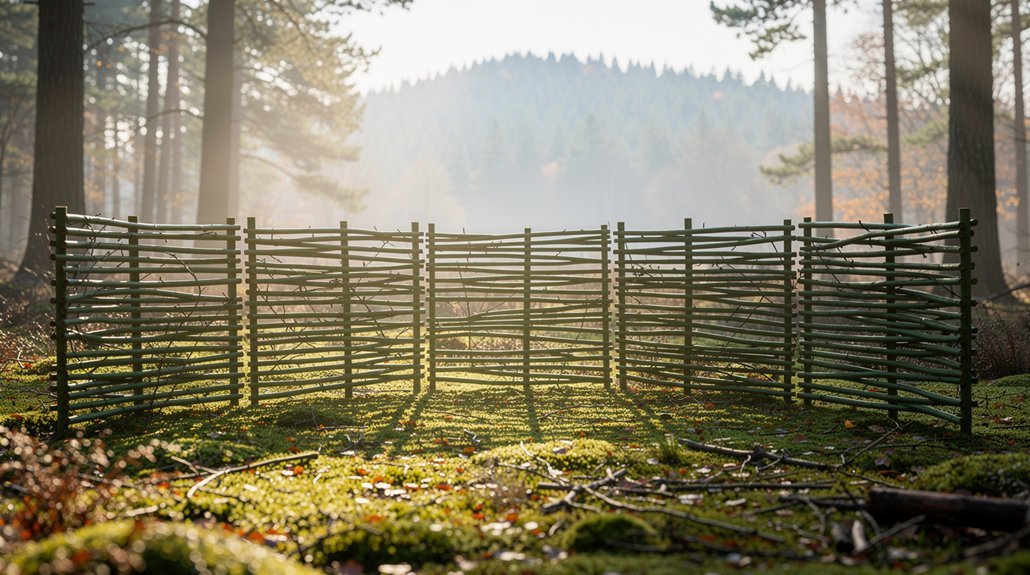
If you need a versatile, space‑saving support for vines, roses, cucumbers, or any climbing plant, the 36×92″ expandable garden trellis panel is the ideal choice. It’s made from 100 % real willow, with sticks ¼‑⅜″ thick, and expands from 11″ × 47″ closed to 22″ × 120″ fully opened. High‑quality rivets create strong, turnable joints, letting you adjust length for short or tall growers. Installation’s a breeze: just bind the panel to any frame or surface. You can also wrap LED strings on its DIY frame, turning it into a festive light display or a decorative fence accent.
- Material:100% real willow
- Expandable Size (Fully Expanded):22″ × 120″
- Closed Size (Fully Contracted):11″ × 47″
- Plant Compatibility:Vine, ivy, rose, cucumber, clematis
- Installation Method:Rivets & zip ties, easy attach
- Decorative Use:LED string lights, festival décor
- Additional Feature:DIY LED frame wrap
- Additional Feature:Turnable rivet joints
- Additional Feature:Fence/divider versatility
Expandable Garden Trellis 13.2″ x 63″ for Climbing Plants
Looking for a compact, versatile trellis that fits tight balcony spaces yet stretches to support a full garden of vines? This expandable garden trellis folds from 17.3” × 9” to a full 63” × 13.2”, giving you a space‑saving, adjustable frame for any vertical setup. Made from carbonized pine, it resists weather and holds up under heavy vines like tomatoes, cucumbers, and beans. You install it without tools—just unfold, lock the sections, and secure it to a wall or fence. Its sleek wooden lattice adds a modern look while delivering the stability needed for vigorous, vertical growth, keeping your garden tidy and productive.
- Material:Carbonized pine
- Expandable Size (Fully Expanded):63″ × 13.2″
- Closed Size (Fully Contracted):17.3″ × 9″
- Plant Compatibility:Tomatoes, cucumbers, beans, etc.
- Installation Method:Simple expand/contract, no tools
- Decorative Use:Aesthetic garden accent
- Additional Feature:Carbonized pine material
- Additional Feature:Space‑saving design
- Additional Feature:Sleek modern aesthetics
Expandable Garden Trellis 37″x90″ Wooden Lattice Panel
The Expandable Garden Trellis 37″ × 90″ wooden lattice panel is perfect for anyone who needs a versatile, space‑saving support system for climbing vegetables, vines, or flowers on a balcony, patio, or small garden. You’ll love its easy‑no‑tool setup; just pull the panel to its full 90″ × 37″ size and lock it in place. Made from carbonized pine, it resists weather while staying lightweight. Its compact 45.2″ × 9.4″ footprint folds neatly for storage, then expands to give sturdy support for tomatoes, cucumbers, beans, roses, and ivy. The sleek design adds a modern touch, turning any tiny outdoor area into a thriving vertical garden.
- Material:Carbonized pine
- Expandable Size (Fully Expanded):90″ × 37″
- Closed Size (Fully Contracted):45.2″ × 9.4″
- Plant Compatibility:Tomatoes, cucumbers, beans, etc.
- Installation Method:Simple expand/contract, no tools
- Decorative Use:Sleek modern garden accent
- Additional Feature:Compact closed footprint
- Additional Feature:Weather‑resistant carbonized pine
- Additional Feature:Vertical garden suitability
Nature Willow Expandable Plant Trellis (36″x92″) Double Panel
Gardeners seeking an elegant, space‑saving trellis for climbing herbs or vines will love the Nature Willow Expandable Plant Trellis (36″ × 92″) Double Panel, because its real‑willow wicker construction offers a natural look while the high‑quality rivets let you expand or contract the frame to fit any garden opening. The handmade willow ribbons stay chemical‑free and retain a warm, organic hue. You’ll connect the panels with sturdy rivets and zip‑tie them to fences or posts, ensuring a secure yet flexible support. Adjust the size from a compact 11×47 in to a full 22×120 in spread, perfect for vines, herbs, or festive lighting. Installation takes minutes, and the versatile design adapts to walls, fences, or garden dividers.
- Material:Natural willow wicker
- Expandable Size (Fully Expanded):22″ × 120″
- Closed Size (Fully Contracted):11″ × 47″
- Plant Compatibility:Vine, ivy, rose, cucumber, etc.
- Installation Method:Rivets & zip ties, easy attach
- Decorative Use:LED lights, holiday décor
- Additional Feature:Natural willow color
- Additional Feature:Zip‑tie binding option
- Additional Feature:Double‑panel construction
Expandable Garden Wooden Lattice Trellis 13″x68
Need your balcony or patio need a sturdy yet stylish support for climbing vines, the Expandable Garden Wooden Lattice Trellis 13″x68 delivers a weather‑proof cedar frame that’s 30 % thicker than its predecessor—providing the strength you crave without sacrificing the natural grain you love. You can extend it to 13 × 68 inches or collapse it to 10.2 × 17.3 inches, fitting tight spaces and larger walls alike. The carbonized lattice stays waterproof, resists warping, and lets light and air flow to petunias, clematis, roses, or ivy. Installation is a snap; you adjust the height, secure it with brackets, and watch vines climb, adding shade and visual appeal to any garden or balcony.
- Material:Natural cedar wood (carbonized)
- Expandable Size (Fully Expanded):13″ × 68″
- Closed Size (Fully Contracted):10.2″ × 17.3″
- Plant Compatibility:Petunias, clematis, bougainvillea, roses, grapes, ivy
- Installation Method:Adjustable, zip‑tie or screw fasteners
- Decorative Use:LED lights, decorative fence/trellis
- Additional Feature:30% thicker ribs
- Additional Feature:Waterproof cedar wood
- Additional Feature:Light‑transmitting lattice
Factors to Consider When Choosing Diamond Trellis Panels for Supporting Living Fence Plants
When picking diamond trellis panels, you’ll want to check the material’s quality and durability to ensure it stands up to weather and plant weight. Consider the size and expandability so the panel fits your fence layout and can grow with the plants. Also, look at rivet joint strength, how easy it is to install, and whether the design matches the types of vines or shrubs you plan to support.
Material Quality and Durability
Durability hinges on the material you choose, so prioritize trellis panels crafted from carbonized pine or cedar. These woods resist weathering, extending your fence’s outdoor lifespan. Check the panel’s thickness and weave density; a tighter lattice and sufficient gauge prevent sagging under heavy vines. Look for a carbonized or treated finish that curtails warping, cracking, and color shift over time. Verify that the connecting points use sturdy, turnable rivets or bindings that can tolerate moisture and plant load without loosening. Ensure the wood’s natural grain is intact, as defects can weaken structural integrity. By focusing on these quality cues, you’ll select a trellis that stays rigid, reliable, and attractive season after season.
Size and Expandability
How much space do you really need for your climbing vines? You’ll want a trellis that expands to give them room to grow without crowding. Most panels stretch from about 63” to 120” in length and 9” to 13” in width when fully unfolded, providing ample vertical and horizontal spread. When closed, they shrink to roughly half that footprint, making storage and transport a breeze. Look for models that let you fine‑tune the expansion, so you can fit irregular fence sections or walls perfectly. Keep material in mind—carbonized pine or cedar influences how far the panel can span while staying stable, directly affecting how much vertical growth you can count on. Choose a size that matches your plant’s mature spread and your garden’s layout.
Rivet Joint Strength
Wondering whether your trellis will stay solid as it expands? Rivet joints are the backbone of any expandable diamond panel, giving you both strength and turnability. High‑quality rivets keep the frame rigid when you widen or heighten the fence, preventing sagging as vines grow. They also let you adjust spacing between panels, so you can tailor the fit to uneven terrain or irregular plant growth. Look for rivets that resist loosening under rain, wind, and temperature swings—these durable fasteners protect long‑term support. When you install them, tighten each rivet snugly; even a slight wobble can compromise stability and stress climbing vines. Choosing robust, weather‑proof rivets ensures your living fence remains firm, flexible, and ready for seasonal changes.
Installation Simplicity
Ever wondered how quickly you can set up a living fence without a toolbox? You’ll want panels that expand in width and height with no tools, so look for simple zip‑tie or minimal‑fastener attachments. Choose designs that use riveted joints or hinged connections—those let you reconfigure the trellis in seconds. Make sure the mounting system works on fences, walls, or frames, offering flexible options like brackets or slots. Lightweight, durable materials such as wood or willow keep the setup light enough to hand‑carry, yet strong enough to stay secure when you tighten the fasteners. When you pick a panel with these features, you’ll spend minutes, not hours, getting your living fence ready for planting.
Plant Compatibility Range
Which climbing vines, vegetables, or shrubs you plan to grow dictates the ideal diamond‑trellis panel. First, list the species—vines, ivy, roses, cucumbers, tomatoes, beans, clematis, grapevines—and match them to a panel whose material (wood, willow, carbonized pine) meets each plant’s moisture preferences and avoids staining or resin transfer. Next, examine spacing and openness; larger leaves and thick stems need wider gaps so vines can twine without crowding, while finer foliage thrives in tighter meshes. Check load tolerance and joint strength: heavier climbers like roses or grapevines will gain mass, so the panel must hold weight as they mature. Finally, confirm the design promotes vertical growth and airflow, reducing disease risk and keeping your living fence healthy.
Weather Resistance Capability
How can you guarantee your diamond‑trellis panels survive the elements? Choose material wisely—carbonized pine or cedar, when properly treated, resists moisture, rot, and UV better than untreated wood. Look for waterproof, weatherproof coatings that seal the surface, preventing warping, cracking, and fading. Inspect construction: sturdy joints, rivets, and connectors keep panels intact under wind, rain, and temperature swings. Install panels securely, then schedule periodic maintenance—re‑seal, clean, and check for splits or loose hardware. By combining durable, treated wood, high‑quality finishes, robust hardware, and regular upkeep, you’ll ensure your living fence panels stay strong and functional year after year.
Aesthetic Design Flexibility
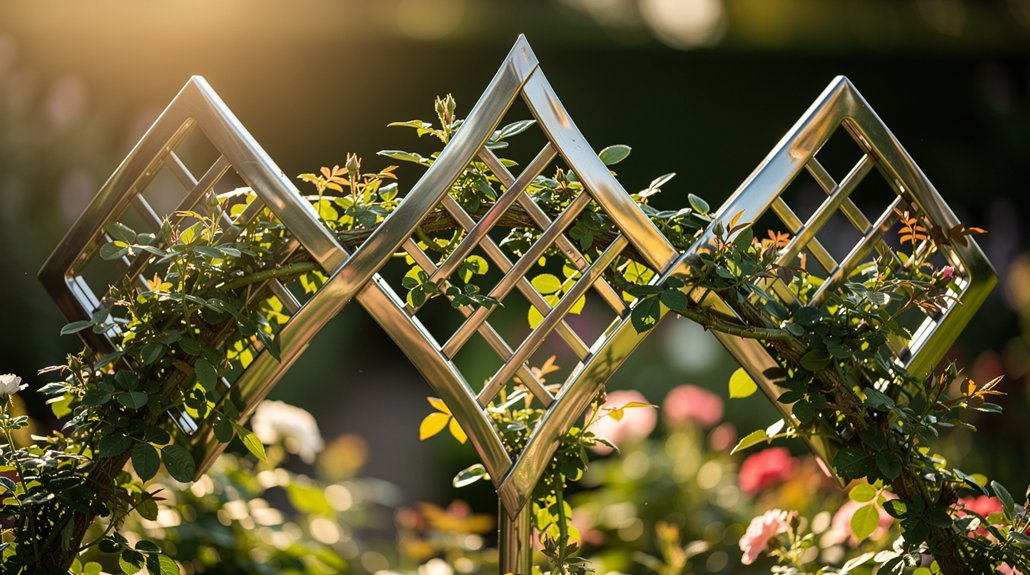
Curious about how a diamond trellis can transform your garden’s vibe? You’ll love the geometric patterns that instantly give a modern, eye‑catching backdrop for climbing plants. Choose dense meshes for a tight, lush look, or larger openings to let light and shadow dance across foliage. Expandable configurations let you resize the pattern as your fence grows, keeping visual harmony with nearby architecture. If you prefer warmth, opt for natural wood finishes like cedar or carbonized pine; they age into elegant silver‑gray or deep amber patinas that complement greenery. Custom framing—think LED wraps or door‑style extensions—adds seasonal flair without sacrificing structural integrity. These design choices let you tailor aesthetics while supporting thriving living fence plants.
Versatile Decorative Uses
You’ve already seen how geometry shapes your garden’s vibe; now let’s explore how those same diamond panels can double as eye‑catching décor. When you hang LED string lights across the angled openings, the lattice glows at dusk, turning a functional fence into a nighttime showcase. Lightweight ornaments—like wind chimes or seasonal ribbons—clip easily into the pockets, letting you swap themes without damaging the frame. Choose panels with carbonized pine or willow frames; they resist rot and keep their polished look season after season. Adjustable widths let you span wide walls or narrow pathways, preserving visual harmony even as plants grow. By treating each diamond as a decorative divider, you create a living mural that’s both healthy for vines and striking for guests.
Frequently Asked Questions
How Do Diamond Trellis Panels Affect Plant Root Airflow?
You’ll notice the panels create channels that let air circulate around roots, preventing stagnation. This oxygen boost promotes healthier growth, while the mesh’s spacing stops soil compaction and encourages robust, well‑aerated root systems.
Can I Install Panels on Uneven Terrain Without Extra Hardware?
Yes, you can mount panels on uneven ground by using adjustable brackets or slotted holes that let you tilt and level each piece, so you won’t need extra hardware beyond the basic fasteners.
What Is the Optimal Spacing Between Panels for Dense Foliage?
You should space the panels about 18‑24 inches apart, depending on plant species. Closer spacing—around 18 inches—creates denser foliage, while 24 inches gives a bit more airflow without sacrificing support.
Do Panels Require Seasonal Cleaning to Maintain Structural Integrity?
Yes, you should clean panels each season; remove debris, wash off algae, and inspect for rust or loose joints. Regular maintenance preserves strength, prevents corrosion, and keeps your living fence thriving.
How Do Panels Influence Pollinator Movement Along a Living Fence?
You’ll see pollinators weave through the panel’s open geometry, using the gaps as flight corridors while the lattice guides them across the fence, increasing visitation rates and plant cross‑pollination.