
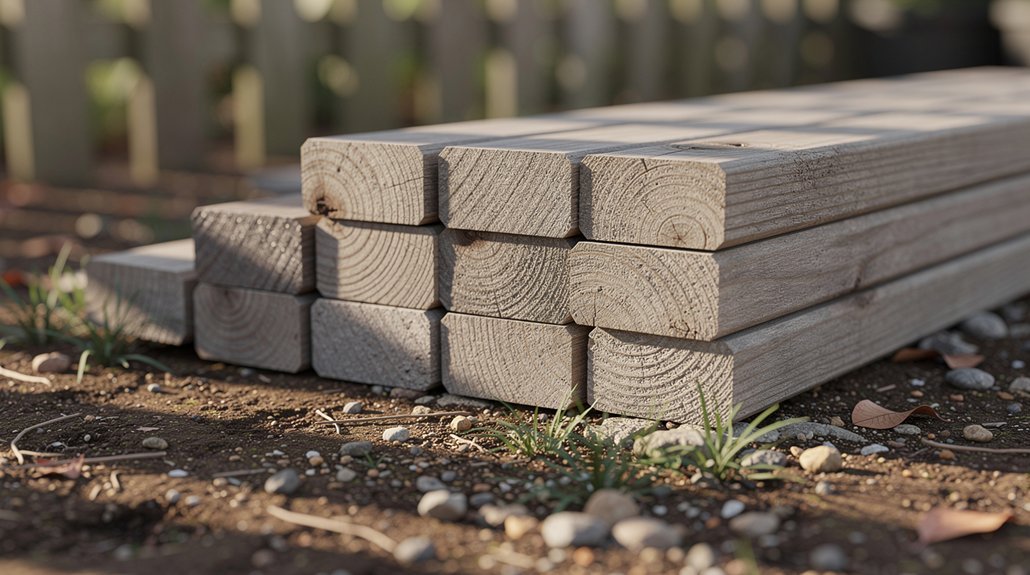
You’re planning a fence that sits directly on the ground, and the right gravel board can keep it stable, dry, and long‑lasting. In 2026 the market offers a mix of recycled‑plastic composites, HDPE grids, and pressure‑treated lumber, each promising rot resistance, drainage, and easy installation. Some options even come pre‑drilled for quick anchoring, while others boast eco‑friendly certifications and extended warranties. The challenge is figuring out which blend of durability, sustainability, and cost fits your project best.
| Vodaland HexPave Grass & Gravel Pavers (Recycled PPE) |  | Eco Champion | Material: Recycled PPE plastic | Thickness / Depth: 1 1/8 in (≈2.9 cm) | Cell Size (Individual Grid Cell): 22 7/8 × 19 7/8 in | CHECK ON AMAZON | Read Our Analysis |
| VEVOR 27×4 ft Ground Grid Stabilization System | 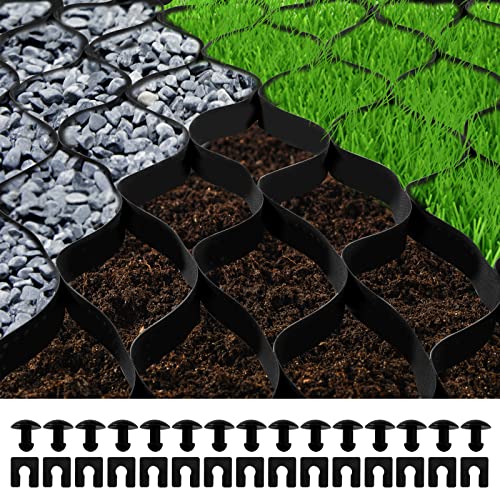 | Heavy Duty | Material: Recyclable HDPE | Thickness / Depth: 0.05 in (1.2 mm) | Cell Size (Individual Grid Cell): 7.9 × 7.9 in (20 × 20 cm) | CHECK ON AMAZON | Read Our Analysis |
| Gravel Grid Geocell Ground Stabilization for Driveways and Paths |  | Mud‑Master | Material: Heavy‑Duty HDPE | Thickness / Depth: 2 in (≈5 cm) | Cell Size (Individual Grid Cell): Open‑cell (no fixed dimension) | CHECK ON AMAZON | Read Our Analysis |
| Gravel Grid 4x40ft HDPE Geo Grid with Stakes & Connectors |  | Modular Pro | Material: HDPE | Thickness / Depth: 2 in (≈5 cm) | Cell Size (Individual Grid Cell): 8.66 × 8.66 in | CHECK ON AMAZON | Read Our Analysis |
| Vodaland 2″ GeoCell 9×17 ft Black Permeable Walking PathsVodaland 2″ GeoCell 9×17 ft Black Permeable Walking Paths |  | Pedestrian Elite | Material: Perforated polyethylene | Thickness / Depth: 2 in (≈5 cm) | Cell Size (Individual Grid Cell): Open‑cell (no fixed dimension) | CHECK ON AMAZON | Read Our Analysis |
| 2″ Gravel Grid Geogrid Stabilizer System 3.3X17FT | 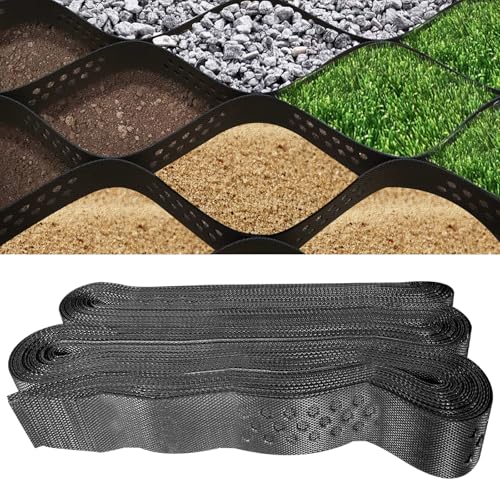 | Light‑Load Specialist | Material: Recyclable HDPE | Thickness / Depth: 2 in (≈5 cm) | Cell Size (Individual Grid Cell): 10 × 10 cm (≈3.9 × 3.9 in) | CHECK ON AMAZON | Read Our Analysis |
| 40ft HDPE Heavy Duty Ground Grid for Driveways & Soil Stabilization | 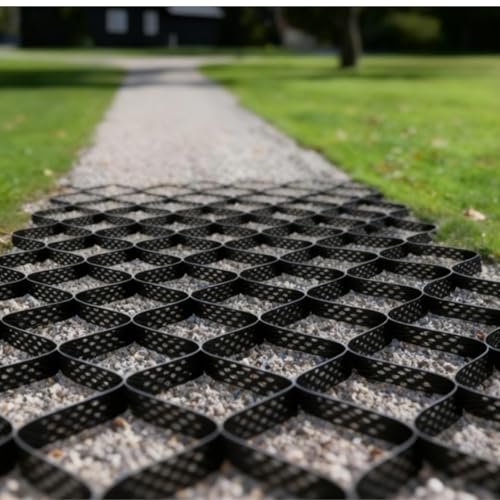 | Storm‑Ready | Material: Recycled HDPE | Thickness / Depth: 3 in (≈7.6 cm) | Cell Size (Individual Grid Cell): Open‑cell (no fixed dimension) | CHECK ON AMAZON | Read Our Analysis |
| Happybuy Ground Grid 1885 lb/ft² Stabilization System |  | High‑Strength | Material: HDPE | Thickness / Depth: 2 in (≈5 cm) | Cell Size (Individual Grid Cell): 7.9 × 7.9 in (20 × 20 cm) | CHECK ON AMAZON | Read Our Analysis |
| Landscape Edging – 10″ inch Depth (40 feet) |  | Long‑Lasting | Material: Recycled plastic | Thickness / Depth: 10 in (≈25 cm) | Cell Size (Individual Grid Cell): Not applicable (edging) | CHECK ON AMAZON | Read Our Analysis |
More Details on Our Top Picks
Vodaland HexPave Grass & Gravel Pavers (Recycled PPE)
Looking for a durable, eco‑friendly base for your ground‑level fence? You’ll love Vodaland’s HexPave Grass & Gravel Pavers, made from 100 % recycled PPE plastic. Each kit ships 22 units, each 22 7/8 × 19 7/8 × 1 1/8 in, covering 65 sq ft at a 1‑inch depth. The permeable grid lets rainwater seep through, filtering naturally and reducing runoff while recharging groundwater. With a load capacity up to 27 000 lbs—depending on base and fill—you get solid stability for patios, driveways, walkways, or shed foundations. Installation’s straightforward: just lay the gravel grid and fill. It’s a versatile, sustainable solution for any outdoor project.
- Material:Recycled PPE plastic
- Thickness / Depth:1 1/8 in (≈2.9 cm)
- Cell Size (Individual Grid Cell):22 7/8 × 19 7/8 in
- Load Capacity (When Filled):Up to 27,000 lb (overall)
- Coverage per Unit:65 ft² (22 units)
- Permeability / Drainage:Permeable, rainwater seeps through
- Additional Feature:100% recycled PPE plastic
- Additional Feature:Easy‑install gravel grid
- Additional Feature:Reduces runoff, recharges groundwater
VEVOR 27×4 ft Ground Grid Stabilization System
Who needs a sturdy, low‑maintenance base for a ground‑level fence? You’ll appreciate the VEVOR 27 × 4 ft Ground Grid Stabilization System, which covers 108 sq ft with 7.9 × 7.9 cm cells that lock infilled gravel or soil in place. Made from recyclable HDPE, it resists photo‑oxidation, acids, and alkalis, and its 0.05‑in thickness offers 1.2 mm of flexible strength. Supersonic welds hold cells together, supporting up to 1885 lb/in² when filled. Install by spreading, anchoring, connecting, and filling—quick, labor‑saving, and portable. It works on slopes, patios, driveways, and any soft ground needing a solid, permeable surface.
- Material:Recyclable HDPE
- Thickness / Depth:0.05 in (1.2 mm)
- Cell Size (Individual Grid Cell):7.9 × 7.9 in (20 × 20 cm)
- Load Capacity (When Filled):1,885 lb/ft² (cells filled)
- Coverage per Unit:108 ft² (per unit)
- Permeability / Drainage:Horizontal water/permeation, honeycomb
- Additional Feature:Supersonic weld technology
- Additional Feature:Cuttable for custom sizing
- Additional Feature:Horizontal water/permeation design
Gravel Grid Geocell Ground Stabilization for Driveways and Paths
If you need a driveway or path that stays firm under heavy foot traffic, livestock, or equipment, the 17.6 ft × 6.6 ft Gravel Grid Geocell is the solution. Its heavy‑duty HDPE cells interlock and resist UV, so the surface stays stable for years. The dual‑connection design spreads pressure evenly, preventing washouts, ruts, and erosion while supporting vehicles, trailers, and animals. Open‑cell construction drains water, keeping gravel dry and mud‑free. Installation is simple: expand the grid, anchor edges, cut to fit curves, then fill with gravel or soil. Connect multiple panels for larger areas and enjoy a clean, compact surface year‑round.
- Material:Heavy‑Duty HDPE
- Thickness / Depth:2 in (≈5 cm)
- Cell Size (Individual Grid Cell):Open‑cell (no fixed dimension)
- Load Capacity (When Filled):Heavy‑vehicle support (no exact figure)
- Coverage per Unit:17.6 × 6.6 ft ≈ 116 ft² (per panel)
- Permeability / Drainage:Open‑cell improves drainage, reduces pooling
- Additional Feature:Dual‑connection pressure distribution
- Additional Feature:Mud‑control for livestock areas
- Additional Feature:Flexible to curved layouts
Gravel Grid 4x40ft HDPE Geo Grid with Stakes & Connectors
The Gravel Grid 4×40 ft HDPE Geo Grid with stakes and connectors is perfect for anyone needing a sturdy, drainage‑ready base for driveways, patios, or shed foundations without the hassle of traditional concrete. You’ll get two 4‑by‑20‑ft panels covering 160 sq ft, each cell 8.66 in square and 2 in deep. The U‑shaped stakes (30) and 40 connectors lock panels together quickly, letting you cut or adjust for irregular terrain. Filled with gravel, soil, or grass, the honeycomb design bears over 1,885 lb per sq ft, stops migration, and channels water away. Made of UV‑resistant HDPE, it stays flexible in cold, resists abrasion, and lasts for years. Installation is a simple DIY: unfold, stake, and connect.
- Material:HDPE
- Thickness / Depth:2 in (≈5 cm)
- Cell Size (Individual Grid Cell):8.66 × 8.66 in
- Load Capacity (When Filled):1,885 lb/ft² (cells filled)
- Coverage per Unit:160 ft² (two 4 × 20 ft sections)
- Permeability / Drainage:Honeycomb design enables drainage
- Additional Feature:U‑shaped stakes included
- Additional Feature:30‑day Amazon return
- Additional Feature:Compact 13.22 lb weight
Vodaland 2″ GeoCell 9×17 ft Black Permeable Walking PathsVodaland 2″ GeoCell 9×17 ft Black Permeable Walking Paths
Pedestrians who need a sturdy, drainage‑friendly surface will love Vodaland’s 2‑inch GeoCell, a 9‑ft × 17‑ft black grid that lets water flow through while supporting foot traffic. You’ll spread the perforated polyethylene sheet, anchor it with 30 J‑hooks, then fill each 2‑inch cell with soil, sand, or gravel. The 1885 lb/ft² tensile strength holds up under heavy footfall, and the 100% permeable design prevents pooling and erosion. Covering 160 sq ft per panel, it fits DIY patios, landscaping, and light‑load pads perfectly. The black finish stays visible, ensuring you can spot any wear or damage early.
- Material:Perforated polyethylene
- Thickness / Depth:2 in (≈5 cm)
- Cell Size (Individual Grid Cell):Open‑cell (no fixed dimension)
- Load Capacity (When Filled):1,885 lb/ft² (cells filled)
- Coverage per Unit:160 ft² (per section)
- Permeability / Drainage:100 % permeable, drainage focus
- Additional Feature:Pedestrian‑only safety design
- Additional Feature:30 J‑hooks per unit
- Additional Feature:Black color for visibility
2″ Gravel Grid Geogrid Stabilizer System 3.3X17FT
Homeowners seeking a durable, low‑maintenance base for patios, walkways, or shed foundations will find the 2‑inch Gravel Grid Geogrid Stabilizer System 3.3 × 17 ft ideal, because its high‑density polyethylene construction resists oxidation, aging, and chemical attack while supporting up to 1,900 lb/ft² when filled. The 56‑sq‑ft grid expands to 10 × 10 cm cells, each foldable for easy transport. You lay it flat, anchor with steel piles, then fill cells with soil, sand, or gravel. Its HDPE core endures acid, alkali, and climate swings, delivering a stable, erosion‑resistant surface for gardens, terraces, driveways, and shed bases without heavy maintenance.
- Material:Recyclable HDPE
- Thickness / Depth:2 in (≈5 cm)
- Cell Size (Individual Grid Cell):10 × 10 cm (≈3.9 × 3.9 in)
- Load Capacity (When Filled):1,900 lb/ft² (cells filled)
- Coverage per Unit:56 ft² (per unit)
- Permeability / Drainage:Permeable, reduces erosion
- Additional Feature:Foldable for transport
- Additional Feature:Steel piles/anchors option
- Additional Feature:56 sq ft coverage per unit
40ft HDPE Heavy Duty Ground Grid for Driveways & Soil Stabilization
Looking for a driveway base that handles heavy loads while letting water flow through? This 40 ft × 4 ft 3‑in HDPE grid gives you a crack‑resistant, recyclable platform that drains stormwater via its honeycomb cells. You’ll interlock sections without tools, then cut to shape for a custom fit. Fill the grid with soil, gravel, or grass, and you’ll prevent waterlogging, erosion, and mud on heavy‑traffic driveways, shed pads, or lawn parking spots. Installation takes minutes—no concrete, no professionals. The permeable design supports heavy loads, stabilizes slopes, and promotes a green, sustainable ground‑stabilization solution.
- Material:Recycled HDPE
- Thickness / Depth:3 in (≈7.6 cm)
- Cell Size (Individual Grid Cell):Open‑cell (no fixed dimension)
- Load Capacity (When Filled):Heavy‑load support (no exact figure)
- Coverage per Unit:160 ft² (40 × 4 ft)
- Permeability / Drainage:Permeable, storm‑water management
- Additional Feature:Crack‑resistant construction
- Additional Feature:Tool‑free interlocking assembly
- Additional Feature:Recycled HDPE material
Happybuy Ground Grid 1885 lb/ft² Stabilization System
If you need a reliable, low‑maintenance base that can handle heavy foot traffic, vehicles, and drainage without turning your yard into a mud pit, the Happybuy Ground Grid is the answer. Its HDPE honeycomb cells, 20 × 20 cm each, spread load up to 1,885 lb/ft², letting you park a car or host a party without sinking. You lay the 27 × 4 L panels, anchor them, connect edges, then fill with gravel, soil, or grass. The 5.1 cm depth and 1.2 mm thickness resist UV, chemicals, and aging, while the permeable design keeps water flowing. At 6.5 kg per panel, you can cut, fold, and expand to fit any fence‑base layout.
- Material:HDPE
- Thickness / Depth:2 in (≈5 cm)
- Cell Size (Individual Grid Cell):7.9 × 7.9 in (20 × 20 cm)
- Load Capacity (When Filled):1,885 lb/ft² (cells filled)
- Coverage per Unit:108 ft² (per unit)
- Permeability / Drainage:Permeable, water flow allowed
- Additional Feature:3‑D honeycomb structure
- Additional Feature:Easy cut‑and‑expand design
- Additional Feature:6.5 kg (14.3 lb) weight
Landscape Edging – 10″ inch Depth (40 feet)
Need a landscape edge that stays firm for a decade‑plus without sagging or breaking? You’ll love this 10‑inch‑deep, 40‑foot edging. It’s flexible enough to curve around beds, yet sturdy—12‑gauge (2.5 mm) recycled‑plastic that resists 200 lb‑force punctures. The integrated above‑ and and below‑ground design locks mulch, gravel, or soil in place while blocking invasive roots and grass. Made in the USA, it can outlast a century, far surpassing conventional edging that lacks depth. Install it once, and you’ll keep clean lines and a protected garden for years without maintenance.
- Material:Recycled plastic
- Thickness / Depth:10 in (≈25 cm)
- Cell Size (Individual Grid Cell):Not applicable (edging)
- Load Capacity (When Filled):Not applicable (edging)
- Coverage per Unit:40 ft length (edging)
- Permeability / Drainage:Not applicable (edging)
- Additional Feature:100% recycled plastic
- Additional Feature:200 lb‑force puncture resistance
- Additional Feature:Over 100‑year lifespan
Factors to Consider When Choosing Pressure‑Treated Gravel Boards for Ground‑Level Fence Bases
You’ll want to check the board’s material quality and load‑bearing capacity first, since they determine how well it supports the fence and resists rot. Next, consider drainage and permeability to keep water from pooling and causing damage. Finally, weigh installation ease and environmental sustainability to ensure a quick, eco‑friendly build.
Dur Material Quality
When selecting pressure‑treated gravel boards for a ground‑level fence base, prioritize durability ratings that guarantee resistance to warping and cracking under constant moisture exposure. Look for boards treated with preservative formulas such as alkaline copper quaternary, which fend off fungal decay and insects for years. Check that the product’s moisture‑content stability and low shrinkage are documented, confirming it won’t swell or shrink when soil stays damp. Verify the treatment class meets regional ground‑contact standards, ensuring the wood can handle soil moisture and UV rays without rapid degradation. Finally, choose boards with a proven track record of maintaining structural integrity under repetitive soil, gravel, and occasional foot‑traffic loads. These criteria keep your fence base solid and long‑lasting.
Load‑Bearing Capacity
How much weight will your fence base actually hold? That depends on board thickness and the fill you choose. Thicker, interlocked grids or honeycomb designs spread load evenly, pushing typical bearing capacities to 1,885–2,000 lb/ft² when cells are properly filled. Use a rigid grid, secure it to the ground, and fill with the right material—gravel, compacted soil, or grass—to hit those numbers. If you exceed the rating, expect deformation, rutting, or settlement that will destabilize the fence. So, when comparing models, check the listed load‑bearing rating, verify the board’s thickness, and confirm the installation guidelines for fill and anchoring. This ensures your fence base can support the intended loads without compromising stability.
Drainage and Permeability
Even if your fence base can bear the required load, water that can’t escape will erode the surrounding soil and undermine stability. Choose boards with open‑cell or perforated designs so rainwater passes straight through instead of pooling on the surface. The grid‑like substrate and edge channels boost infiltrative capacity, letting water reach the soil below and recharge groundwater rather than running off. This permeability also curbs erosion by reducing the force that drives soil away from the base. Look for pressure‑treated lumber that maintains structural integrity while offering these open pathways, ensuring consistent load distribution without sacrificing drainage. Properly selected boards keep the base dry, stable, and long‑lasting.
Installation Ease
A well‑chosen pressure‑treated gravel board makes installation a breeze, but you still need to watch a few key details. First, pick a board whose length matches the fence height so it sits flush, and verify its thickness is uniform with square edges for a stable, level contact. Second, make sure the preservative grade—ACQ or MCA—matches ground exposure, protecting against decay and termites. Third, use corrosion‑resistant screws or bolts and pre‑drill pilot holes to avoid splitting; this keeps the board from warping under load. Fourth, backfill with coarse gravel, leaving a gap of at least an inch between board and soil to prevent capillary rise. Finally, check that the board’s dimensions and material resist swelling in your climate, ensuring a long‑lasting, level fence base.
Environmental Sustainability
Installation ease is only part of the picture; the next step is to weigh environmental sustainability. When you pick pressure‑treated gravel boards, look for low‑impact preservatives—waterborne or polymeric options that meet code without releasing formaldehyde. Choose products that use recycled content or timber sourced from responsibly managed forests; these reduce carbon footprints while still delivering rot‑ and insect‑resistance. Consider the board’s life cycle: energy‑efficient manufacturing, long‑term durability in ground‑contact use, and end‑of‑life recyclability or safe disposal. A board that lasts longer cuts down on maintenance trips, which in turn lowers pesticide use and chemical runoff. By selecting low‑emission, sustainably sourced, and recyclable boards, you protect soil health, reduce greenhouse‑gas emissions, and keep your fence base environmentally responsible.
Frequently Asked Questions
Can Treated Boards Be Used on Sloped Terrain?
Yes, you can use treated boards on sloped terrain, but make sure you stagger them, add extra support brackets, and secure each board with corrosion‑resistant screws to prevent shifting.
Do the Boards Require Additional Anchoring for High Winds?
Yes, you should add extra anchors when winds are strong. Use ground spikes or concrete footings, and secure each board with heavy‑duty straps or lag bolts to prevent uplift and shifting.
What Is the Expected Lifespan of These Boards in Wet Climates?
You’ll see them lasting around 15‑20 years in wet climates, provided you treat any rot promptly and keep drainage clear, because the pressure‑treated wood resists moisture but still degrades over time.
Are the Materials Recyclable After End‑Of‑Life?
You can recycle the boards if you separate the treated wood from the gravel; the wood goes to a hazardous‑waste facility, while the gravel can be crushed and reused in landscaping or road base projects.
Do They Affect Underground Utility Detection?
Yes, they can interfere with underground utility detection because the dense, moisture‑rich boards may mask signals, so you should use a metal detector or consult a professional before installation.

Leave a Reply