
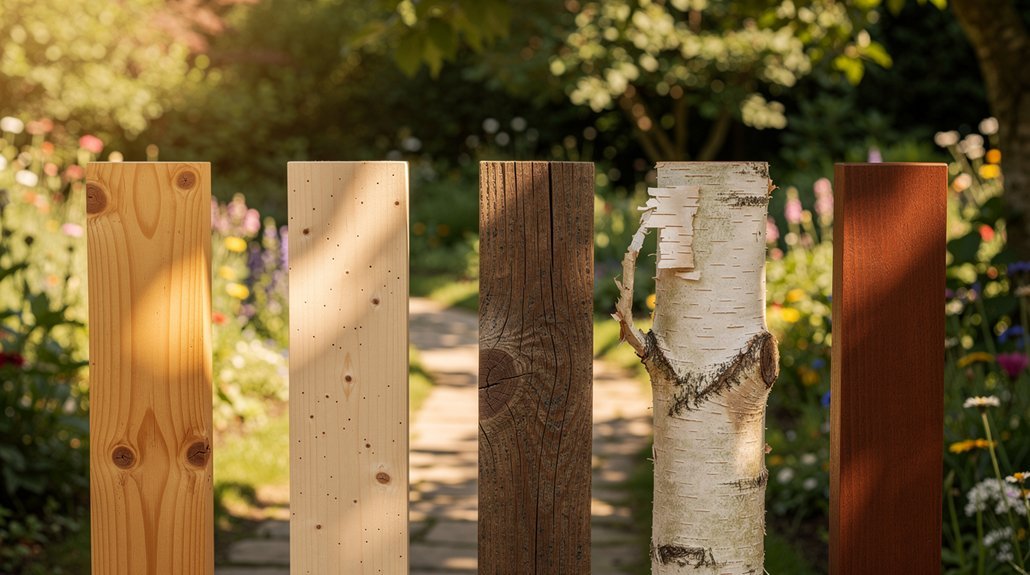
You’re looking for sturdy, chemical‑free supports that blend seamlessly into an organic garden, and the market’s 2026 lineup offers several solid choices. From Greenes Fence’s 3‑ft and 5‑ft stakes that double as sign posts to VEVOR’s rot‑resistant fir posts, each option promises natural durability and easy installation. Add Hosuly’s cedar caps for a polished finish, and you’ve got a versatile toolkit for any garden layout—yet the nuances of each product’s performance and suitability still need unpacking.
| Greenes Fence 3 Ft. Wooden Garden and Sign Post Stakes (25-Pack) |  | Best Overall | Material: Wood (beige) | Length: 3 ft | Cross‑Section Size: ¾ in × ¾ in | CHECK ON AMAZON | Read Our Analysis |
| VEVOR Wooden Garden Stakes – 25 Pcs 36×0.75in Sharp Point Fir Wood Support |  | Budget-Friendly Pick | Material: Fir wood | Length: 3 ft (36 in) | Cross‑Section Size: ¾ in × ¾ in | CHECK ON AMAZON | Read Our Analysis |
| Greenes Fence 5 Ft. Wooden Garden and Sign Post Stakes (100-Pack) |  | Heavy‑Duty Choice | Material: Wood (untreated) | Length: 5 ft | Cross‑Section Size: ¾ in × ¾ in | CHECK ON AMAZON | Read Our Analysis |
| Hosuly 4×4 Wood Post Caps with Ball Finial |  | Decorative Accent | Material: Cedar wood (post caps) | Length: N/A (post cap) | Cross‑Section Size: Fits 4 × 4 in post (3‑5/8 in) | CHECK ON AMAZON | Read Our Analysis |
| Greenes Fence Deluxe Picket Wooden Fence – 18″ L x 36″ W (Pack of 12) |  | Eco‑Friendly Classic | Material: Wood (sustainable) | Length: 18 in (height) | Cross‑Section Size: 18 in × 36 in panel | CHECK ON AMAZON | Read Our Analysis |
More Details on Our Top Picks
Greenes Fence 3 Ft. Wooden Garden and Sign Post Stakes (25-Pack)
Looking for a simple, chemical‑free way to anchor garden plants or signage? Greenes Fence’s 3 ft wooden stakes give you a sturdy, untreated option. Each beige, pointed‑end stake measures 36 in × ¾ in × ¾ in, making installation a breeze—just tap it into soil and you’re set. The 25‑piece pack weighs 10 lb total, so you can support rows of tomatoes, beans, or decorative signs without worrying about rust or plastic leaching. They fit any garden style, hold up under wind, and earn a solid 4.6‑star rating from 200 reviewers. Ideal for eco‑conscious growers seeking reliable, natural support.
- Material:Wood (beige)
- Length:3 ft
- Cross‑Section Size:¾ in × ¾ in
- Pointed End / Installation Design:Pointed end for easy insertion
- Quantity per Pack:25 stakes
- Usage/Application:Garden support & sign posts
- Additional Feature:Beige color finish
- Additional Feature:10‑pound total weight
- Additional Feature:4.6‑star rating
VEVOR Wooden Garden Stakes – 25 Pcs 36×0.75in Sharp Point Fir Wood Support
Who needs a simple, sturdy way to keep climbing tomatoes or beans upright without chemicals? You’ll love the VEVOR wooden garden stakes: 25 pieces of 36‑inch, ¾‑inch fir posts with a sharp point that slides into soil with a tap of a hammer. The natural fir resists rot, so they stay reliable season after season. Use them to mark zones, guide pathways, or build temporary fences, and the consistent size fits most garden layouts. Their clean, untreated look blends into any organic garden, and the sharp tip saves you time during installation. They’re a practical, attractive choice for any chemical‑free landscape.
- Material:Fir wood
- Length:3 ft (36 in)
- Cross‑Section Size:¾ in × ¾ in
- Pointed End / Installation Design:Sharp point for hammer insertion
- Quantity per Pack:25 stakes
- Usage/Application:Plant support, garden fences, borders
- Additional Feature:High‑quality fir wood
- Additional Feature:Sharp point design
- Additional Feature:Versatile garden applications
Greenes Fence 5 Ft. Wooden Garden and Sign Post Stakes (100-Pack)
If you need a reliable, chemical‑free way to support vines, tomatoes, or garden signage, the Greenes Fence 5 ft. wooden garden and sign post stakes are a top pick. Each stake is a straight, untreated 5‑foot pole with a 3/4‑inch square cross‑section, giving you sturdy, natural support without chemicals. The pointed ends let you drive them into soil quickly, and the 100‑pack means you’ll have plenty for rows, borders, or sign posts. We’re lightweight at 72 lb, and customers rate them 4.2 stars from 104 reviews. They work for climbing vines, vegetables, and marking boundaries, making them versatile for any garden layout.
- Material:Wood (untreated)
- Length:5 ft
- Cross‑Section Size:¾ in × ¾ in
- Pointed End / Installation Design:Pointed end for quick install
- Quantity per Pack:100 stakes
- Usage/Application:Plant support, landscaping, sign posts
- Additional Feature:72‑pound total weight
- Additional Feature:Suitable for climbing vines
- Additional Feature:4.2‑star rating
Hosuly 4×4 Wood Post Caps with Ball Finial
Do you want a simple, natural way to protect your 4×4 fence posts while adding a touch of elegance? Hosuly’s cedar caps fit the exact 3‑5/8″ square opening of standard posts, and the pine ball finial crowns each cap with a refined, knot‑free look. You’ll install them with a few studs or a bead of exterior caulk, then enjoy cedar’s innate resistance to rot, insects, and weather. Each pair weighs 1.79 lb, measures roughly 5.3″ × 5.3″ × 5.1″, and lasts for years without chemicals. They’re reusable, sustainable, and perfect for fences, decks, mailbox posts, or any outdoor railings you want to accentuate.
- Material:Cedar wood (post caps)
- Length:N/A (post cap)
- Cross‑Section Size:Fits 4 × 4 in post (3‑5/8 in)
- Pointed End / Installation Design:Square cap with ball finial (no point)
- Quantity per Pack:2 caps
- Usage/Application:Fence post caps, decorative finish
- Additional Feature:Cedar resistance to decay
- Additional Feature:Ball finial decorative top
- Additional Feature:Includes 2 caps
Greenes Fence Deluxe Picket Wooden Fence – 18″ L x 36″ W (Pack of 12)
Gardening enthusiasts who want a quick, eco‑friendly way to frame beds and trees will love the Greenes Fence Deluxe Picket Wooden Fence, because its flat‑top, self‑staking design lets you push each 18‑inch‑by‑36‑inch panel straight into soft soil for instant, chemical‑free borders. You’ll appreciate the natural‑beauty finish, which is water‑based and safe for all plantings. The pack includes twelve 18‑inch‑tall sections, giving you 36 feet of border without any tools or hardware. Made from sustainably harvested wood, the brown panels blend into any garden style while protecting beds and trees. Installation is as simple as stepping on the panel and pressing it down, creating a sturdy, attractive line in seconds.
- Material:Wood (sustainable)
- Length:18 in (height)
- Cross‑Section Size:18 in × 36 in panel
- Pointed End / Installation Design:Self‑staking flat‑top design
- Quantity per Pack:12 panels
- Usage/Application:Decorative garden borders, bed protection
- Additional Feature:Water‑based paint finish
- Additional Feature:Sustainable wood sourcing
- Additional Feature:Self‑staking installation
Factors to Consider When Choosing Untreated Wooden Fence Posts for Chemical‑Free Gardens
When you pick untreated posts, first check their durability and natural decay resistance to ensure they’ll last without chemicals. Make sure the wood comes from sustainable sources and matches your soil’s pH and root growth patterns. Finally, choose a style that’s easy to install and maintain, so you can keep your garden chemical‑free without extra hassle.
Dur Durability and Longevity
Choose the right wood species and grain, and you’ll give your fence a natural edge against rot. You’ll want the hardest, straight‑grained stock—fir or cedar are top choices—because dense grain slows moisture penetration. Pay attention to end grain and surface checks; any cracks become pathways for water, so you should keep posts sealed and ensure proper drainage. Install each post on well‑graded soil, bury it deep enough to avoid pooling, and space them to reduce mechanical stress. Regularly inspect for soil contact and insect activity, and clear any debris that traps moisture. By controlling these variables, you’ll extend the post’s service life, keeping your chemical‑free garden’s fence strong for years.
Natural Resistance to Decay
What makes an untreated fence post last in a chemical‑free garden? You’ll find that the wood species you pick matters most—some naturally resist decay, letting you skip chemicals while still holding up against rain, snow, and sun. Look for straight, defect‑free timbers with tight grain; they shed moisture better and stay stronger longer. Keep the post’s base dry by shaping proper drainage and avoiding waterlogged soil, because excess moisture accelerates rot. Also, consider how often insects might reach the wood; species with inherent insect resistance give you extra peace of mind. By matching a decay‑resistant species with good installation practices, you’ll extend the life of your fence without resorting to synthetic preservatives.
Sustainable Harvest and Sourcing
Ever wondered how to keep your garden fence eco‑friendly from the start? When you pick untreated posts, check that the wood comes from forests managed for long‑term health. Look for FSC or PEFC labels; they certify responsible logging that avoids overharvesting and protects biodiversity. A transparent supply chain lets you trace each post back to its origin, giving confidence that the material is renewable and free of synthetic chemicals. Choose suppliers who disclose sourcing practices and support second‑life reuse or recycling at the end of the post’s life. By favoring these sustainable options, you reduce waste, lower the environmental footprint of your fence, and keep your garden truly chemical‑free.
Soil Compatibility and Root Interaction
How does your garden’s soil affect the longevity of untreated fence posts? You need a soil pH that stays near neutral; extreme acidity or alkalinity accelerates wood breakdown and disrupts root‑post harmony. In the moisture‑rich zone around the post, fluctuating wetness can invite fungal or insect attacks, especially since you avoid chemically treated soils. Softer‑grained woods compress under dense root growth, potentially shifting the post, whereas harder species resist that pressure. Choose a post depth and spacing that keeps major roots away from the base, whether your garden sits on sand, loam, or clay. Proper placement reduces root interference, maintains stability, and extends the post’s life in a chemical‑free environment.
Easy Installation and Maintenance
When you pick untreated wooden fence posts for a chemical‑free garden, consider how the design and dimensions will simplify both installation and ongoing upkeep. Post caps and pointed ends guide the post into soil, keeping it straight and cutting down on alignment errors. Choose cedar or fir; their natural decay resistance means you won’t need chemical preservatives to keep the posts strong. A 3/4‑inch square cross‑section offers enough sturdiness for garden stakes while staying easy to handle and drive. Longer posts—say five feet—let you plant deeper, giving extra stability in windy or uneven ground without extra treatment. Opt for self‑staking, flat‑top, or self‑staking designs; they drop in quickly and stay put, reducing future maintenance chores.
Frequently Asked Questions
How Long Do Untreated Wooden Posts Last in Humid Climates?
You’ll typically see untreated wooden posts survive 5–10 years in humid climates, but rot accelerates after three years. Regularly inspect for moisture damage, and replace any that show severe splitting or softness.
Can Untreated Posts Be Painted or Stained Later?
Yes, you can paint or stain untreated posts later, but you should sand the surface first, apply a primer if possible, and let it dry completely before adding any coating to guarantee proper adhesion.
What Wildlife Species Might Damage Untreated Fence Posts?
You’ll find squirrels, woodpeckers, termites, carpenter ants, and even deer gnawing or pecking at untreated posts, especially if moisture makes the wood soft and attractive to them.
Do Untreated Posts Require Special Anchoring Methods?
Yes, you should use deeper, wider holes and add concrete or compacted gravel to keep untreated posts stable, because they’re more prone to rot and shifting without chemical preservatives.
Are There Recommended Treatments for Preventing Fungal Growth?
You can’t completely avoid fungal growth, but you should apply natural sealants like linseed oil or tung oil, and treat the posts with borax‑based solutions, keeping them dry and well‑ventilated for best results.

Leave a Reply