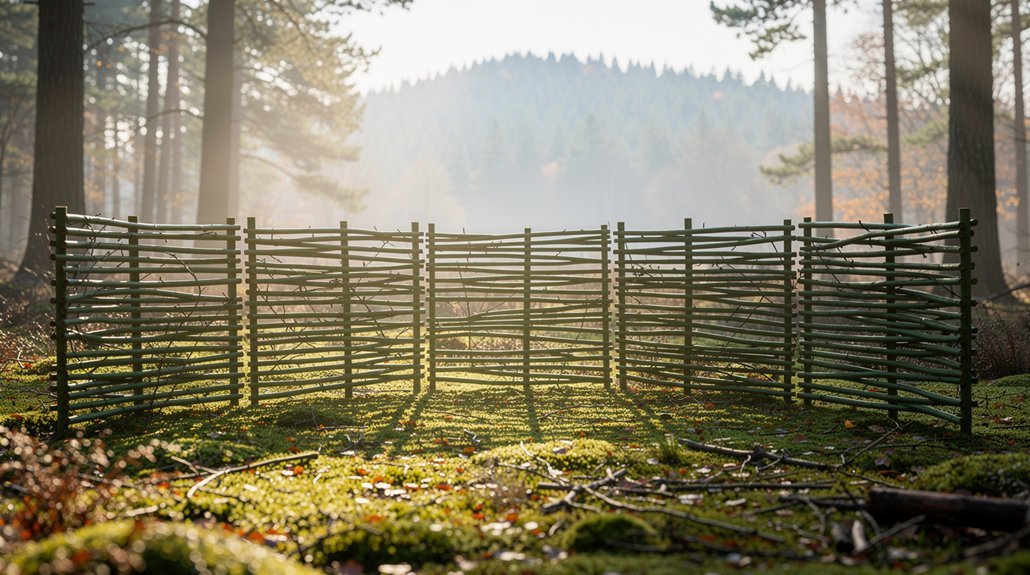

Terraced bamboo creates naturally impenetrable boundaries while enhancing your landscape’s beauty. You’ll benefit from quick-growing foliage that provides privacy, absorbs noise, and resists storms while remaining flexible. The staggered planting technique maximizes visual blocking while allowing healthy airflow, and the extensive root system prevents erosion and stabilizes soil on slopes. With proper variety selection and maintenance, your terraced bamboo barrier becomes both a protective fortress and an aesthetic focal point. The following strategies will transform your property boundaries completely.
Natural Security: How Terraced Bamboo Creates Impenetrable Boundaries

While traditional fencing options often fall short in providing complete security, terraced bamboo stands as nature’s answer to boundary protection challenges.
You’ll find its dense foliage creates an effective privacy screen that blocks unwanted views while absorbing ambient noise from neighboring areas.
The remarkable rapid growth of certain bamboo varieties—up to 35 inches daily—means you’re not waiting years for protection.
Within months, you’ll have a formidable barrier that deters potential intruders. Unlike rigid alternatives, bamboo’s natural structural integrity provides flexibility during storms while maintaining boundary strength.
Your investment in this eco-friendly solution delivers multiple benefits: a sustainable boundary that requires minimal maintenance, enhances your landscape’s aesthetic appeal, and provides reliable security—all while supporting environmental health through bamboo’s natural carbon-sequestering properties.
Tiered Planting Techniques for Maximum Privacy Effect
You’ll achieve ultimate boundary protection by implementing strategic height layering with tall bamboo varieties in the background and progressively shorter ones toward the front.
Create staggered density patterns by spacing plants 3-4 feet apart in alternating formations, which prevents visual gaps while maintaining healthy growth conditions.
Combining different clumping bamboo varieties in your multi-variety screen design enhances both the aesthetic appeal and functional effectiveness of your privacy barrier.
Height Layering Strategies
Creating a multi-dimensional bamboo barrier requires thoughtful height layering, where strategic placement of varying bamboo species transforms a simple screen into an impenetrable privacy fortress.
By positioning taller varieties (reaching 20-30 feet) at the back and incorporating shorter clumping bamboo in front, you’ll develop a visually striking privacy fence while maintaining essential light penetration.
For best results, consider each plant’s mature height when designing your terraced layout. Clumping bamboo works perfectly for lower tiers, providing density without aggressive spread, while running varieties can create dramatic height at the rear boundary.
This tiered approach improves air circulation throughout your living screen, reducing disease risks and promoting healthier growth.
Regular maintenance keeps your layered design intact—strategic pruning and thinning guarantee your bamboo barrier maintains its structured appearance while maximizing privacy protection.
Staggered Density Patterns
Three key strategies transform ordinary bamboo plantings into impenetrable privacy screens: strategic staggering, density variation, and deliberate overlapping. When you arrange your bamboo varieties at varying heights and densities, you create a natural privacy screen that effectively blocks sightlines while maintaining aesthetic appeal.
Implementing tiered planting techniques allows you to position taller bamboo at the back with shorter varieties in front, maximizing both privacy and visual interest. This staggered approach improves airflow and light penetration, promoting healthier growth and reducing disease risk among your plants.
Choose clumping bamboo for your staggered density patterns to minimize invasiveness while achieving robust boundary protection. Your dynamic visual barrier will adapt to seasonal changes, ensuring year-round privacy.
The strategic arrangement creates depth that enhances the effectiveness of your living fence.
Multi-Variety Screen Designs
While single-species bamboo plantings offer uniformity, multi-variety screen designs elevate your privacy barrier to new heights—literally.
By arranging different bamboo species in terraced formations, you’ll create a layered effect that maximizes both coverage and visual interest.
Start with fast-growing varieties at the back for immediate height, then step down with medium and shorter clumping species in front. This strategic arrangement allows better light penetration and air circulation, promoting healthier growth throughout your privacy barrier.
You’ll also benefit from enhanced sound insulation as the varying foliage densities absorb neighborhood noise.
The combination of running and clumping bamboo species provides immediate screening while ensuring long-term stability.
Your multi-variety bamboo screen won’t just protect your boundary—it’ll transform it into a living, breathing landscape feature that serves both practical and aesthetic purposes.
Soil Stabilization Benefits of Multi-Level Bamboo Systems
When implemented strategically along property boundaries, terraced bamboo systems offer remarkable soil stabilization benefits that extend far beyond simple border demarcation. Your property’s sloped areas benefit tremendously from bamboo’s extensive root system that anchors soil in place to prevent erosion.
- Terraced bamboo creates natural barriers that slow water runoff, improving water absorption and reducing soil displacement during heavy rainfall.
- The rapid growth and extensive rhizome network effectively binds soil layers in places where traditional plantings often fail.
- Multi-level configurations improve drainage patterns by allowing water to percolate through different soil strata.
- You’ll enjoy an aesthetically pleasing landscape that simultaneously provides boundary protection and contributes to long-term soil health.
Selecting the Right Bamboo Varieties for Terraced Barriers

Selecting the proper bamboo variety stands as the cornerstone of creating effective terraced barriers that provide both protection and visual appeal.
When designing your terraced system, prioritize clumping bamboo like Fargesia over running types to better control the spread within your defined spaces.
Consider your local climate carefully—choose cold hardy varieties that will flourish in your USDA Plant Hardiness Zone.
The growth habit matters considerably; select species with dense foliage from ground to top for maximum privacy and wind protection. Some varieties can develop impressive barriers, growing 3-5 feet annually.
Match bamboo varieties to your terrace’s sunlight conditions, as most prefer full sun to partial shade.
Remember to assess mature height specifications—options range from dwarf varieties at just one foot to towering species reaching 120 feet.
Maintenance Strategies for Long-Term Boundary Success
Successful bamboo boundaries require consistent maintenance to guarantee their long-term effectiveness and appeal. Your terraced bamboo installation will thrive with proper care techniques that control growth while preserving aesthetic value.
Beautiful bamboo boundaries demand regular attention to maintain their effectiveness as elegant, natural dividers while preventing unwanted spread.
- Regular trimming and pruning – Perform major maintenance in late winter or early spring to control height and spread while encouraging dense foliage development.
- Install rhizome barriers – Prevent unwanted spread by implementing underground barriers that contain aggressive root systems while maintaining the visual appeal of your terraced planting.
- Monitor for rogue shoots – Inspect your bamboo boundary regularly to identify and remove any shoots that might compromise the designated growth area.
- Consider container planting – For maximum control, utilize containers in your terraced design to completely restrict rhizome spread while maintaining flexibility for design modifications.
Aesthetic Integration of Terraced Bamboo With Existing Landscapes

Terraced bamboo creates visual harmony by complementing your existing landscape features with its diverse color palette ranging from vibrant greens to striking blacks and reds.
You’ll achieve multilevel design appeal through strategically arranged bamboo plantings at varying heights, which add depth and dimension while softening harsh boundary lines.
Your landscape gains a cohesive aesthetic when terraced bamboo’s dense foliage connects with nearby trees and shrubs, establishing a natural-looking barrier that serves both protective and decorative purposes.
Visual Harmony Creation
How can your garden boundaries both protect and visually enhance your outdoor space? Terraced bamboo creates visual harmony by reflecting your landscape’s natural topography while providing privacy and protection.
The varying heights of bamboo plantings work with your garden’s existing flow rather than against it.
To achieve perfect visual integration:
- Select clumping bamboo varieties that complement your garden’s style while offering controlled growth.
- Utilize color variations (green, yellow, or black culms) to enhance the beauty of your existing theme.
- Arrange plants in graduated heights that follow natural land contours for a seamless appearance.
- Position dense foliage strategically to create attractive backdrops while blocking unwanted noise and wind.
This thoughtful approach guarantees your bamboo boundary becomes an organic extension of your landscape rather than an obvious divider.
Multilevel Design Appeal
When your landscape presents natural elevation changes, terraced bamboo transforms these variations into stunning design opportunities rather than obstacles. The multilevel design creates visual interest through varied heights and textures, establishing a dynamic boundary protection solution that draws the eye across your property.
You’ll appreciate how terraced bamboo integrates seamlessly with existing landscapes, creating natural gradations between different garden features. By selecting bamboo varieties with distinctive cane colors and foliage density, you can establish striking visual patterns that enhance your property’s overall aesthetic appeal.
This approach isn’t just beautiful—it’s practical. The terraced structure effectively manages sloped terrain while providing privacy and security.
Your boundary becomes a focal point of landscape aesthetics rather than merely a divider, offering both protection and visual harmony that complements your outdoor living space.
Frequently Asked Questions
What Is the Best Bamboo to Block Neighbors?
For blocking neighbors, choose Fargesia clumping bamboo. It won’t invade like running varieties, grows tall enough for privacy, and maintains tidy boundaries. Select varieties suited to your hardiness zone for best results.
What Is the Disadvantage of a Bamboo Fence?
Bamboo fences rot easily, require constant maintenance, lack security, and may attract pests like termites. You’ll need to regularly treat and replace damaged sections to maintain appearance and functionality.
What Type of Bamboo Is Good for Privacy?
For privacy, you’ll want clumping Fargesia bamboo which forms dense barriers without invasiveness. If you need height, try Bambusa vulgaris. For distinctive aesthetics with privacy, consider Phyllostachys nigra with its striking dark culms.
Why Is It Illegal to Grow Bamboo in the US?
Growing bamboo isn’t illegal nationwide, but certain invasive species are banned in some states. You’ll face restrictions if you’re planting running bamboo that can spread aggressively, damaging property and native ecosystems.
In Summary
You’ll find terraced bamboo offers unmatched boundary protection through its layered defense system. By implementing tiered planting strategies, you’re creating both a visual shield and physical barrier that stabilizes your soil. Choose appropriate varieties and maintain them properly to guarantee lasting effectiveness. With minimal upkeep, your terraced bamboo boundary won’t just secure your property—it’ll transform it into an aesthetically pleasing landscape that enhances your entire outdoor space.